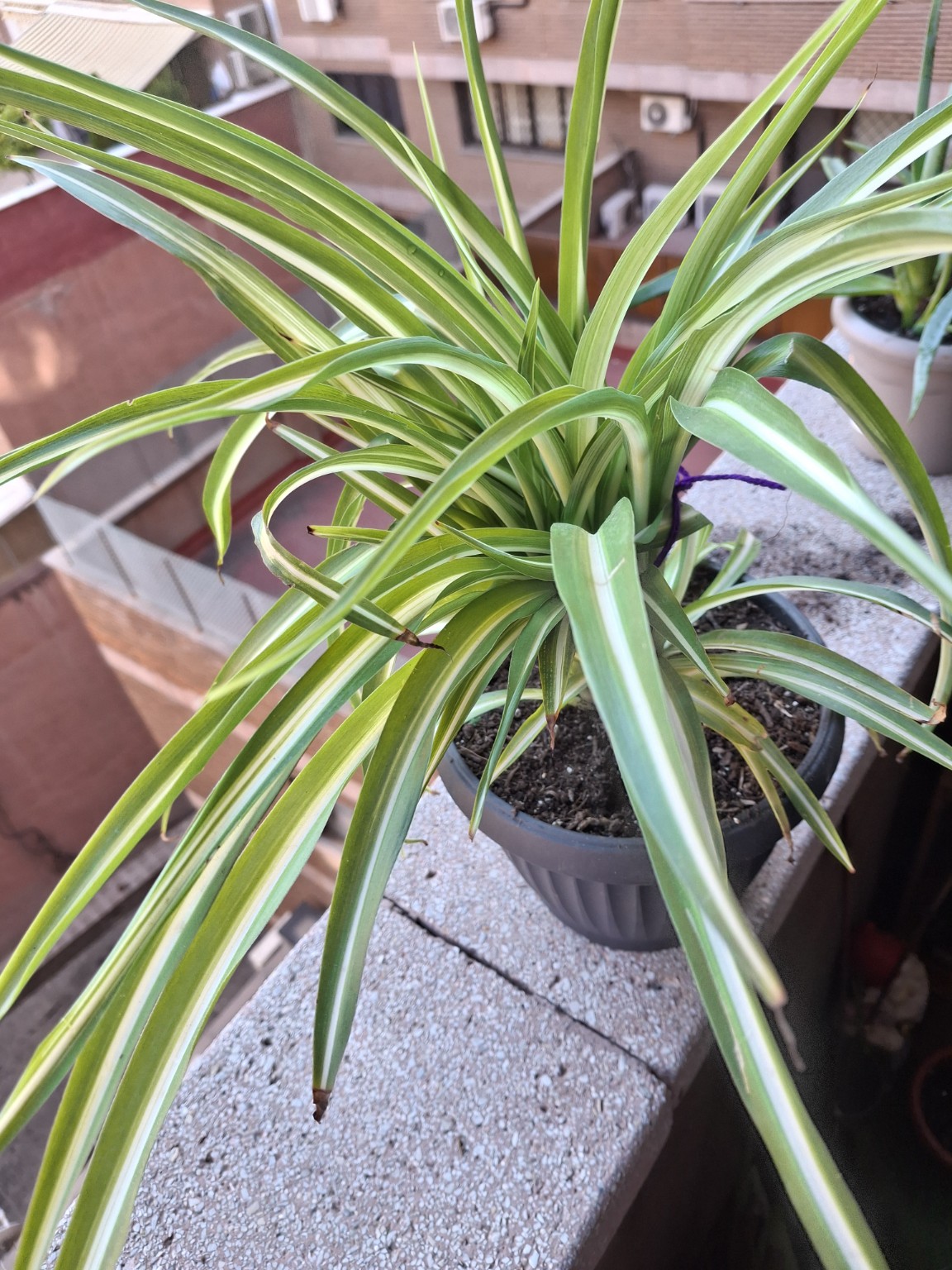
A bright spot without the midday glare
Chlorophytum comosum makes an arching clump of narrow leaves, with small plants developing along trailing stems. Some forms have a pale stripe; others are green. Thick, fleshy roots help it tolerate an occasional missed watering.
Bright, indirect light suits it well. Lower light can slow growth and make the pattern less distinct. Avoid suddenly exposing a shaded plant to hot, direct sun. A shelf near a bright window or a secure hanging planter gives the leaves and runners space.
Check moisture before watering
Let the upper layer of potting mix begin to dry, then check a little deeper. Water when it is no longer evenly moist, before the whole root ball becomes bone dry. Water thoroughly, let the excess drain, and empty the saucer. The plant tolerates some neglect, but repeated drought or waterlogged roots will take a toll.
Lift the pot as well as feeling the mix. If it is heavy and damp, wait and check again. Water use changes with light, temperature, root growth and the container, so a fixed number of days is a poor guide.
Potting, feeding and everyday conditions
Use a pot with drainage holes and a well-drained houseplant mix. Repot when the fleshy roots crowd the container or the plant becomes difficult to water evenly. Go only a little larger, or divide a large clump into sections with roots and growing points.
Normal room conditions usually suit it. Keep it away from frost, cold drafts and the drying air next to a heater. A spider plant does not normally need a high-humidity enclosure.
Feed modestly while it is actively growing, following the product label and allowing for fertilizer already in fresh mix. More food does not mean more babies: excessive fertilizer can damage leaf tips and discourage plantlets.
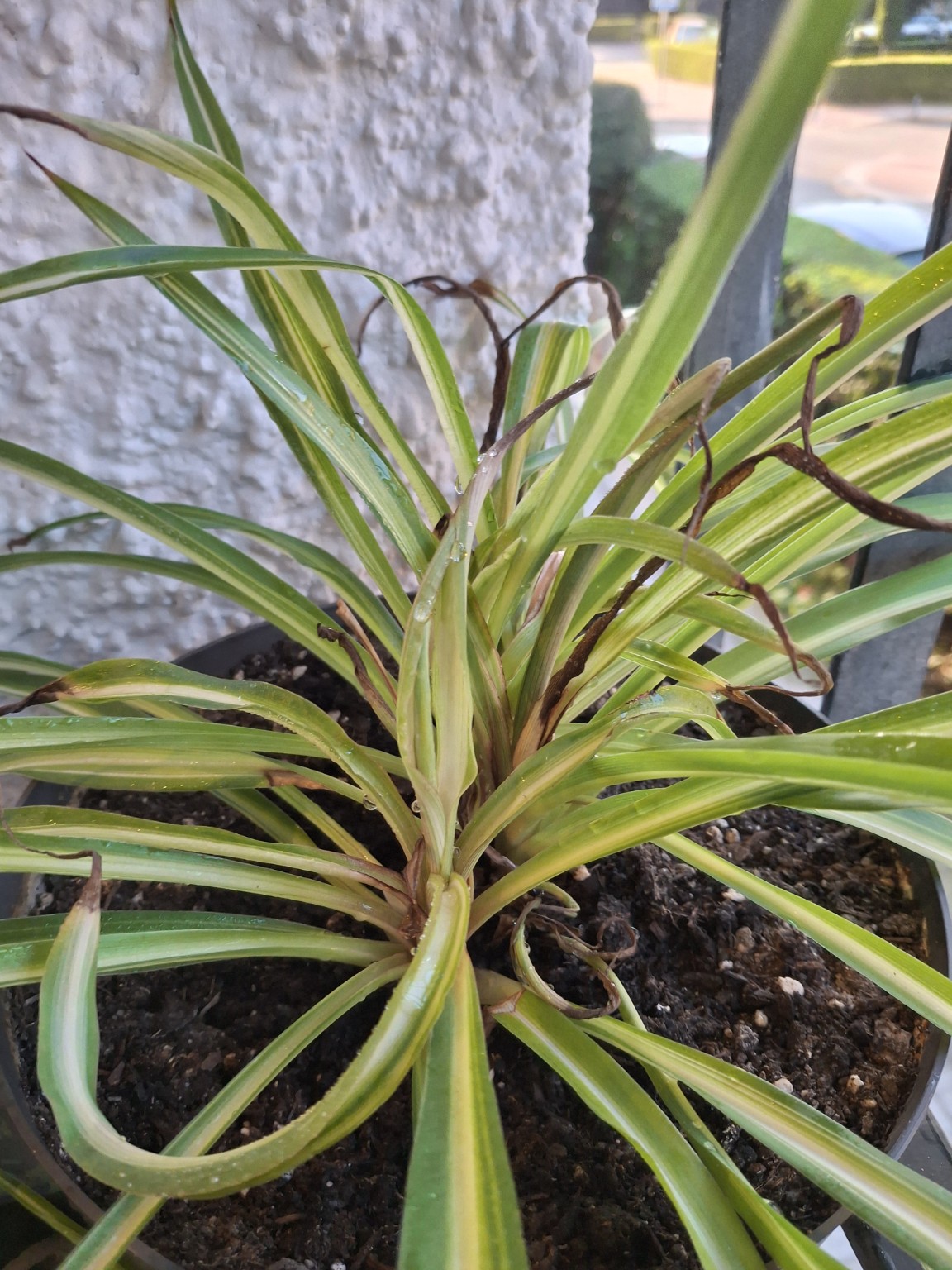
Why are the tips turning brown?
Brown tips are common, but they do not identify a single cause. Before changing the water source or buying a treatment, look at the pot and recent care.
- Check drying and drainage. Repeatedly dry roots, persistently wet mix and an overcrowded root ball can all disrupt water supply. Correct what you actually find.
- Review fertilizer and water. Accumulated salts and fluoride can contribute to tip damage. If this fits the history, reduce unnecessary feeding and try clean rainwater or distilled water.
- Check the location. Strong sun and very dry, heated air may contribute. Move it out of the harshest conditions without sending it into deep shade.
Dead tips will not turn green. You can trim them with clean scissors for appearance, leaving a narrow dry edge rather than cutting well into healthy tissue. Judge the result by whether damage stops advancing and later leaves develop better tips. A single old brown tip is not a reason to unpot an otherwise vigorous plant.
Other changes worth checking
Yellow or faded leaves
Compare the oldest leaves with the center of the clump. An isolated aging leaf differs from widespread yellowing. Check light and moisture, and inspect for pests if you see speckling, insects or sticky deposits. Do not add fertilizer simply because a leaf has lost color.
Drooping leaves or a soft center
Dry mix may explain loss of firmness, but a wet pot needs a root check if decline continues. Soft, decaying roots or a collapsing center are more concerning than the normal arch of a long leaf. Do not keep watering a damp plant in an attempt to make it stand upright.
How to grow the spider plant babies
The miniature plants on the runners are plantlets, not separate leaves. Choose a developed plantlet with visible root nubs or roots. If none are ready, leave the runner attached.
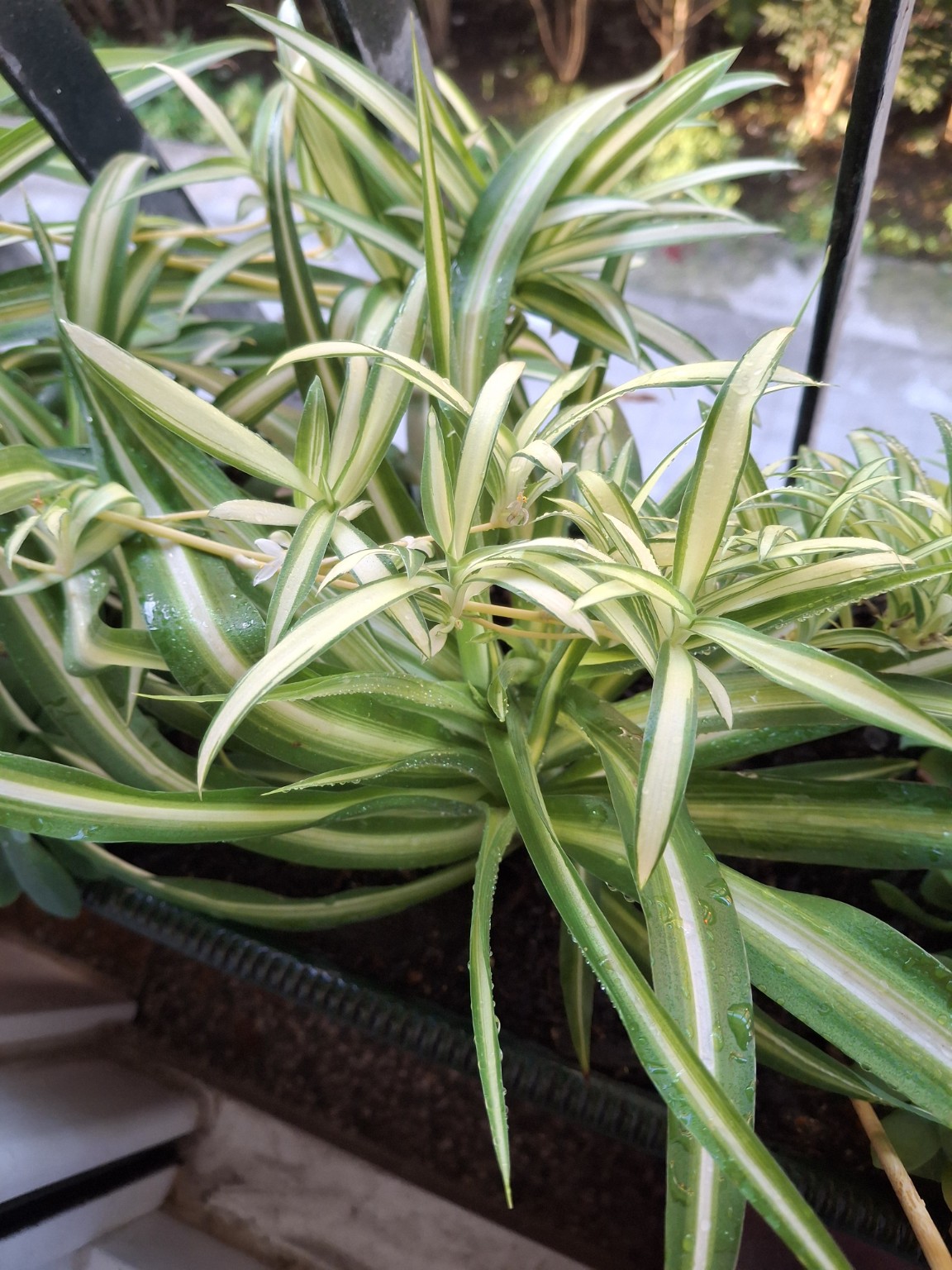
Root it while it stays attached
- Put a small pot of fresh houseplant mix beside the parent.
- Rest the plantlet's base on the mix and secure it lightly, keeping the leafy center above the surface.
- Keep the mix lightly moist in bright, indirect light. Once roots hold the plantlet securely and it is growing, cut the connecting runner with clean scissors.
Start a detached plantlet
A plantlet with its own roots can go straight into a small pot. Keep it lightly moist while it establishes, then move to the usual moisture checks. You can also root a plantlet in water: keep the leaves above the water, maintain clean water and pot it up once roots have developed. Rooting in mix avoids that later change of growing medium.
Do not bury a cut leaf or a bare piece of runner and expect the same result. Propagation is simpler when you start with a recognizable little plant.
Why has mine produced no babies?
A young plant may need to mature. Review the light, temperature, pot size and feeding before trying to force growth. Day length can influence flowering and runner production, too. Avoid excessive fertilizer or a much larger pot; neither guarantees plantlets. A healthy plant without babies is not necessarily in trouble.
Is a spider plant safe for cats and dogs?
The ASPCA classifies Chlorophytum comosum as non-toxic to cats and dogs. That is useful when choosing plants, but it does not make the leaves pet food. Chewing plant material can still upset a pet's stomach, and potting mix or treatments bring separate concerns. Keep the plant protected and ask a veterinarian about persistent symptoms or an uncertain identification.
Other plants in this guide with non-toxic classifications include African violets, Phalaenopsis orchids and calatheas. Snake plant is a different plant; its similar English name does not imply the same safety or care.
Reference material
Reference material consulted for this independently written guide. The publishers listed have not reviewed or endorsed it.
Photographs on this page were taken by the site owner. They document individual plants, not confirmed diagnoses.
- RHS — spider plants: care, brown tips and propagation
- NC State Extension — Chlorophytum comosum: growth and plantlets
- University of Wisconsin–Madison Extension — spider plant growth and structure
- University of Maryland Extension — checking moisture and watering
- University of Maryland Extension — symptoms and possible causes
- University of Illinois Extension — offsets and plantlets
- ASPCA — spider plant: non-toxic to cats and dogs
- ASPCA — plant ingestion and stomach upset
- ASPCA classifications: African violet, Phalaenopsis and Calathea.