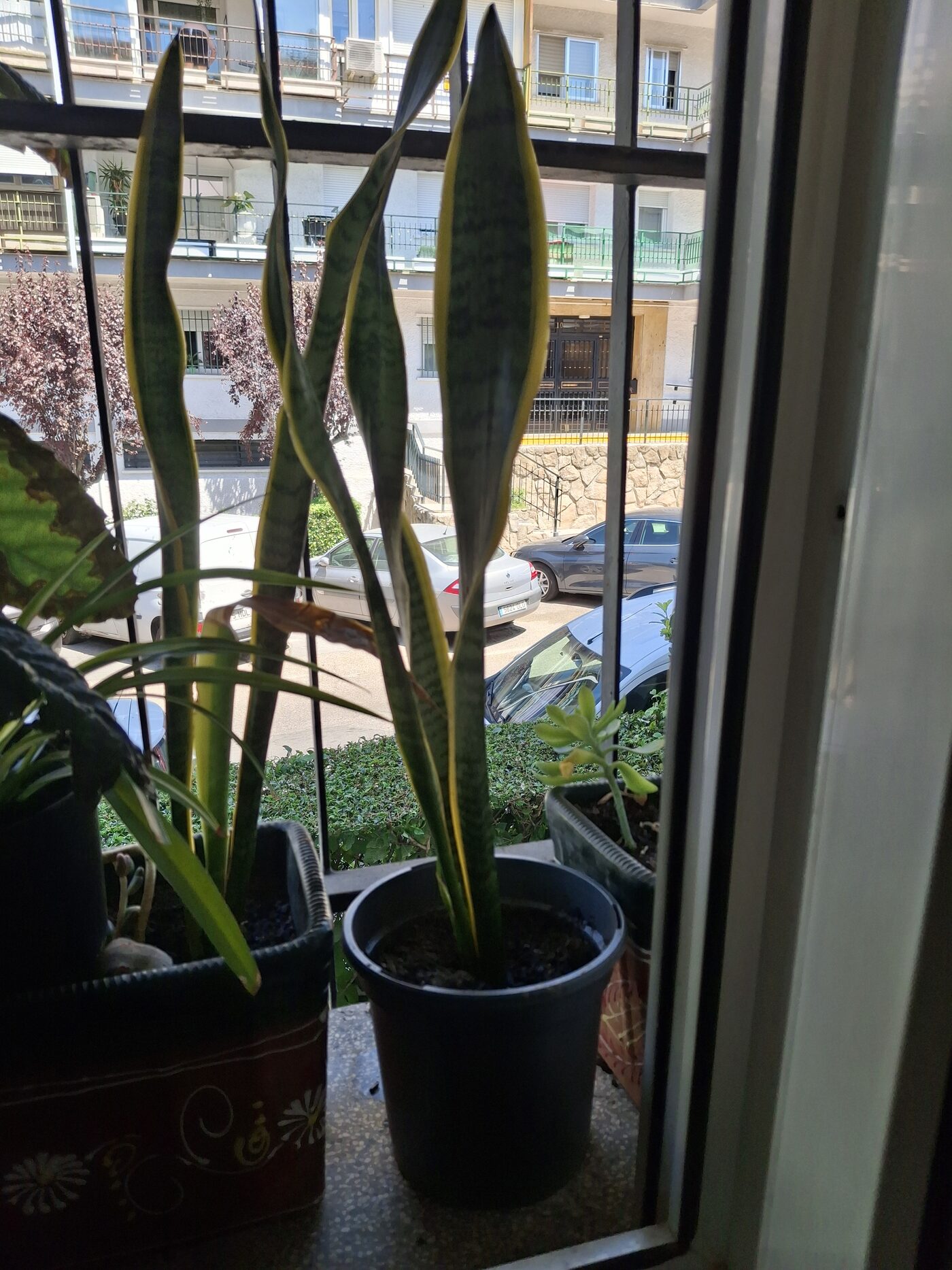
Light: tolerance is not the same as growth
Choose bright, indirect light for useful growth, and introduce stronger light gradually. Tolerating lower light does not mean the plant can thrive indefinitely in a dark corner. A windowless location requires appropriate artificial plant lighting.
Watch the new growth, not just how long an old leaf survives. Check the actual position at different times of day before moving a shade-grown plant into direct sun.
Watering: less than you think, every time
Allow the potting mix to dry between waterings, checking deeper than the surface in a large pot. Compare pot weight and moisture: there is no universal three- or six-week interval.
When water is needed, wet the mix thoroughly, let it drain and empty the cover pot. Drought tolerance is not a reason to ignore prolonged dehydration. A soft base or continuing decline in wet mix calls for inspection, not another watering.
Soil & potting: drainage matters more than fertility
Use a freely draining houseplant or succulent mix in a container with drainage holes. Choose amendments to suit the mix and your conditions, rather than treating one sand or perlite ratio as compulsory.
Repot when roots or rhizomes crowd the container, the pot distorts, or the mix deteriorates. Increase size modestly. One visible root alone does not prove repotting is urgent.
Humidity & temperature
Ordinary household humidity is fine — this plant evolved in arid parts of West Africa and doesn't benefit from misting or humidifiers. Keep it above 50°F (10°C); anything colder for extended periods can cause soft, mushy patches on the leaves that won't recover. Normal room temperature, 65–85°F (18–29°C), is comfortable for it year-round.
Feeding
Use a suitable fertiliser at its labelled dilution during active growth. Account for feed already in fresh compost and reduce or pause feeding when growth slows. Do not fertilise a plant with suspected root damage to force recovery.
Common problems, at a glance
Use these checks to choose the next guide; a symptom alone does not establish a cause.
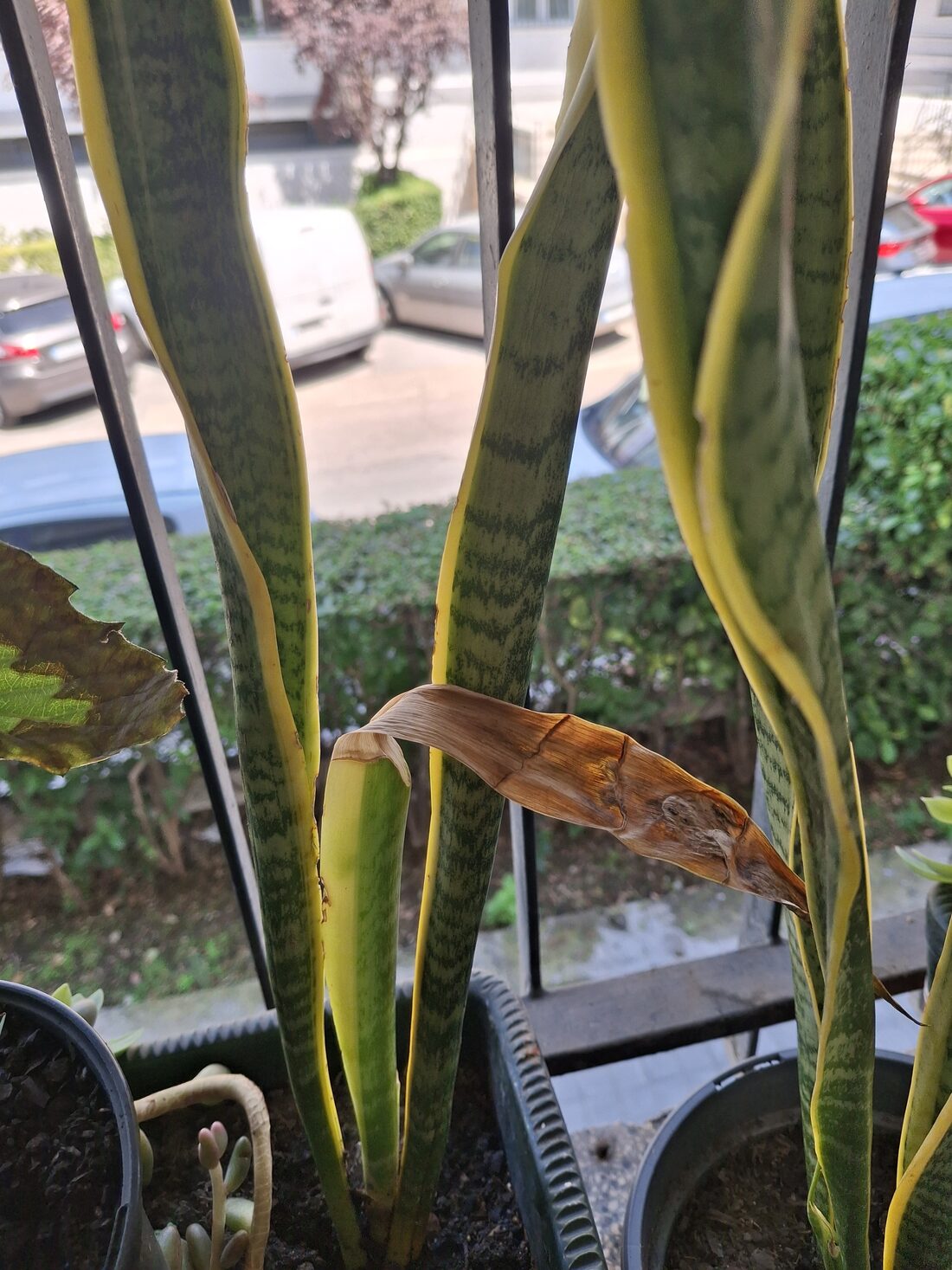
- Soft, mushy, yellowing leaves at the base Check the base, drainage and possible cold exposure. Soft tissue needs closer inspection. Full breakdown →
- Dry, brown, crispy tips Review moisture, roots, feeding and physical damage. A brown tip alone does not diagnose tap-water sensitivity.
- Leaves flopping over instead of standing upright Check firmness at the base, light and any crease or injury before staking or watering. Full breakdown →
- Wrinkled or curling leaves Check the root ball and base before adding water: damaged roots can also leave foliage dehydrated.
- New leaves coming in solid green, losing the yellow edge Check cultivar and propagation history. Leaf cuttings of some yellow-edged cultivars produce green offsets.
Propagation: cuttings work, but not for this variegation
Snake plant is also known as Dracaena trifasciata, formerly Sansevieria trifasciata. Divide a healthy clump into rooted sections with a leaf fan, or use healthy leaf cuttings. Keep the original top-to-bottom orientation of leaf sections.
Leaf cuttings of yellow-edged cultivars such as 'Laurentii' commonly produce green plants. Division is the usual home method for retaining that pattern. Do not promise that every variegated cultivar behaves identically, and do not blame missing yellow margins on light alone.
Is Sansevieria safe for pets?
No. Keep the plant and cut material away from pets and children, and wear gloves when handling sap. Contact a veterinarian after suspected pet ingestion rather than waiting for a large dose or persistent symptoms. Breathing or swallowing difficulty needs urgent attention.
Keep a short care record
Photograph the whole plant and any damage, and note moisture checks and recent changes. Compare later growth rather than expecting an old scar to disappear. Continuing collapse, expanding lesions or extensive decay deserves specialist help.
Reference material
Reference material consulted for this independently written guide. The publishers listed have not reviewed or endorsed it.
- NC State Extension — snake plant
- University of Maryland — watering
- University of Maryland — symptom checks