What the fruit actually looks like

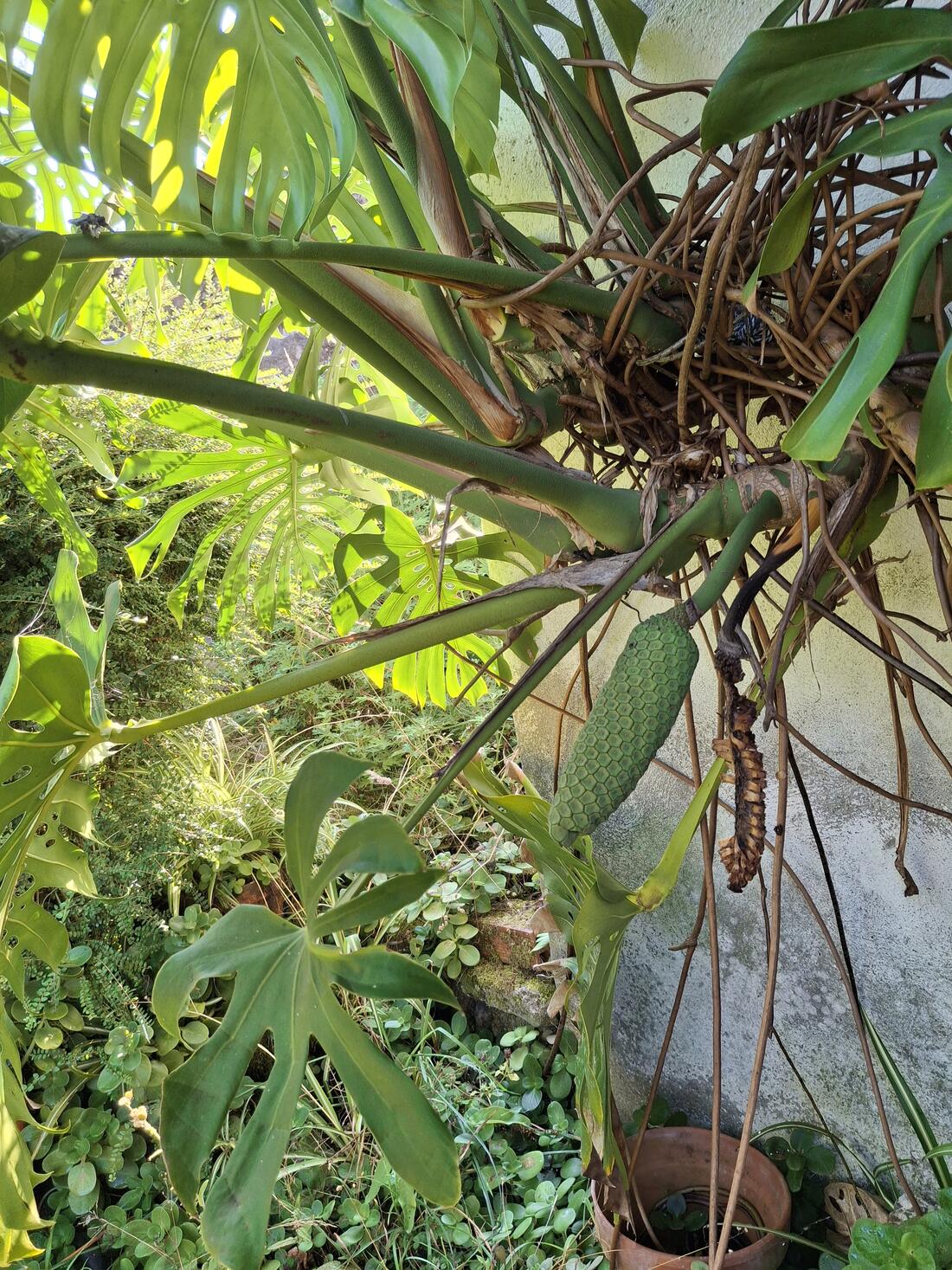
It's not what most people picture. Monstera fruit grows as a long green cone, roughly the size and shape of a corn cob, covered edge to edge in tight hexagonal scales — almost like reptile skin or a pinecone laid flat. Each hexagon is actually the base of a tiny individual flower from the plant's original inflorescence, fused together into one compound fruit. It has nothing in common, visually, with the split, glossy leaves the plant is known for.

Why potted houseplants almost never fruit

If you've never seen your own Monstera do this, that's completely normal — it isn't a sign anything's wrong. Fruiting requires a plant that's genuinely mature, usually several years old at minimum, plus consistently warm temperatures, high humidity, and enough root space to support that level of energy. Most indoor plants are kept in conditions, and pot sizes, that never really allow for it. This particular plant is growing outdoors, rooted directly into the ground against a wall — exactly the kind of unrestricted, stable environment that makes fruiting realistic.

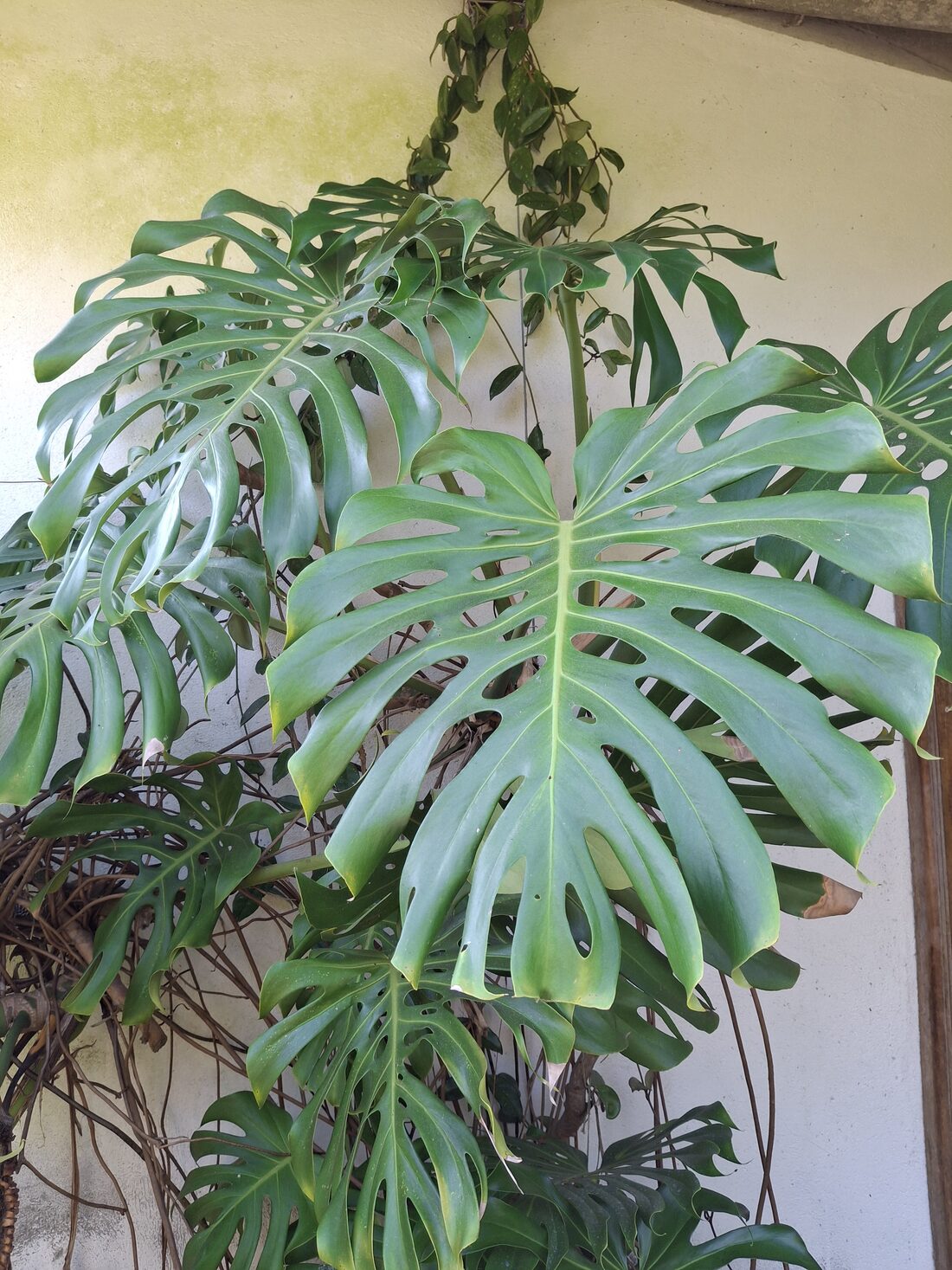
Large, mature Monstera deliciosa leaf with deep fenestrations, growing outdoors
The same plant's foliage — this level of deep, lace-like fenestration is typical of an older, well-established Monstera, which tracks with a plant mature enough to fruit.

How long it takes to ripen

Slowly. From flower to fully ripe fruit typically takes somewhere between 10 and 14 months — this is not a plant that rewards impatience. The fruit in these photos is still green and firm, which means it's unripe. Nothing about how it looks right now suggests it's ready, and that matters, because unripe is where the real risk is.

Do not eat it while it's green. Unripe Monstera fruit contains the same calcium oxalate crystals found throughout the rest of the plant. Biting into it causes intense stinging and burning in the mouth and throat, and can lead to swelling — it is genuinely painful, not just an upset stomach. This applies to the fruit in these photos exactly as it is right now.

How to tell when it's actually ripe

The fruit tells you itself, and you don't have to guess. As it ripens, the hexagonal scales lift away from the flesh underneath and start popping off on their own, starting from the base and working upward — a bit like a pinecone opening. The safe rule is simple: only the sections where the scale has already released on its own are ready to eat. Never pry panels off early to speed things up; the parts still sealed underneath are still unripe and still capable of causing the same burning reaction.

What it tastes like, once it's genuinely ripe

Reports from people who've eaten properly ripened fruit — most commonly where the plant grows outdoors year-round, like Central America, where it's originally from — describe something close to a mix of pineapple, banana, and mango, with a soft, custardy texture. It's the source of the plant's species name, deliciosa, and part of why it was originally brought into cultivation long before it became a houseplant.

The bottom line for this particular plant

Right now, this fruit is a photo, not a snack — it needs several more months outdoors before any of those scales start lifting on their own. If it's still there when that happens, that's a genuinely rare thing to document on a plant this size, and worth an update.