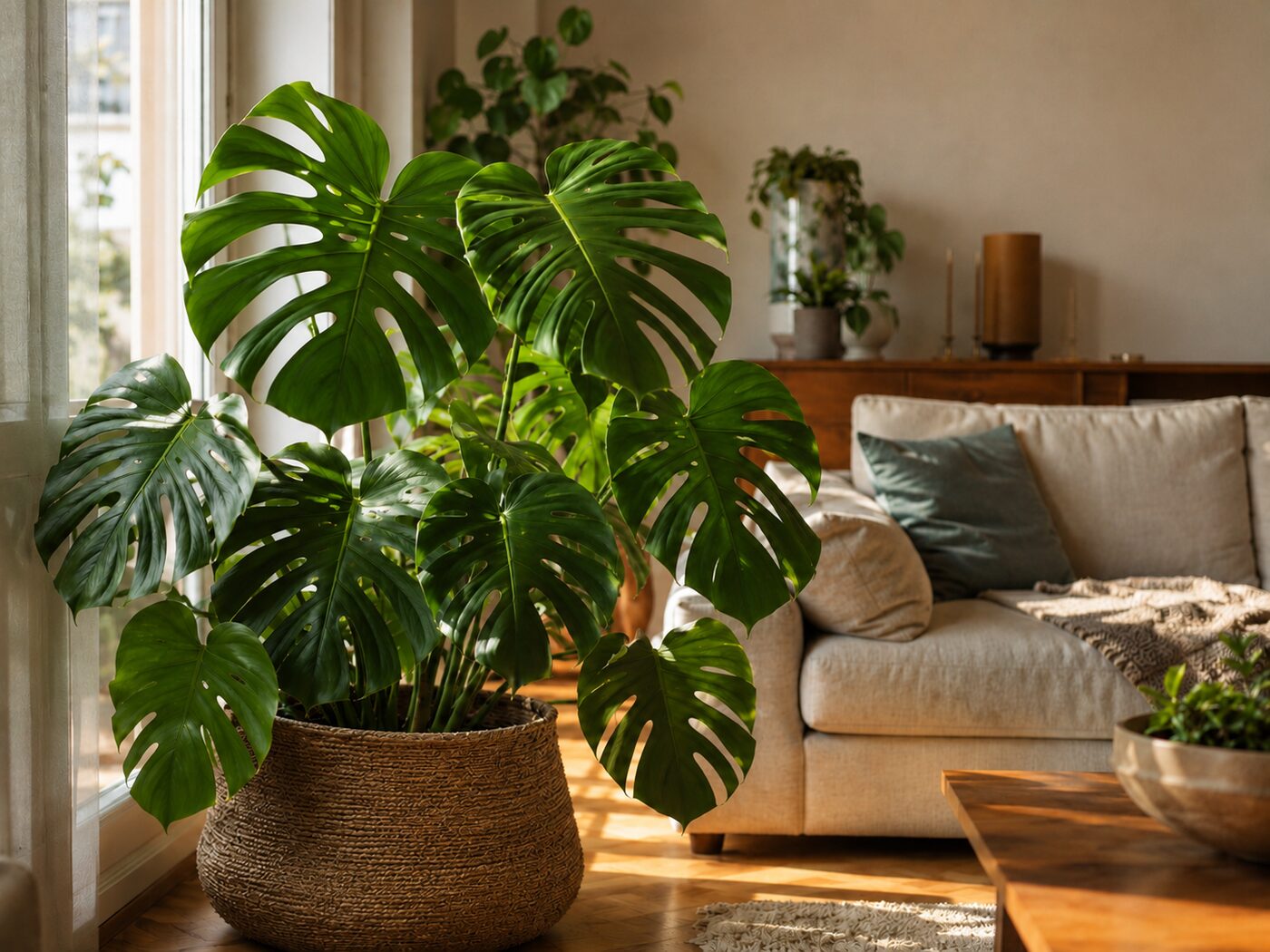
Start with bright, filtered light
Choose a bright position protected from harsh sun. Check the light on the leaves over the day: a compass direction or a fixed distance from a window cannot account for curtains, buildings or the season. Introduce brighter conditions gradually rather than moving a shade-grown plant straight into strong sun.
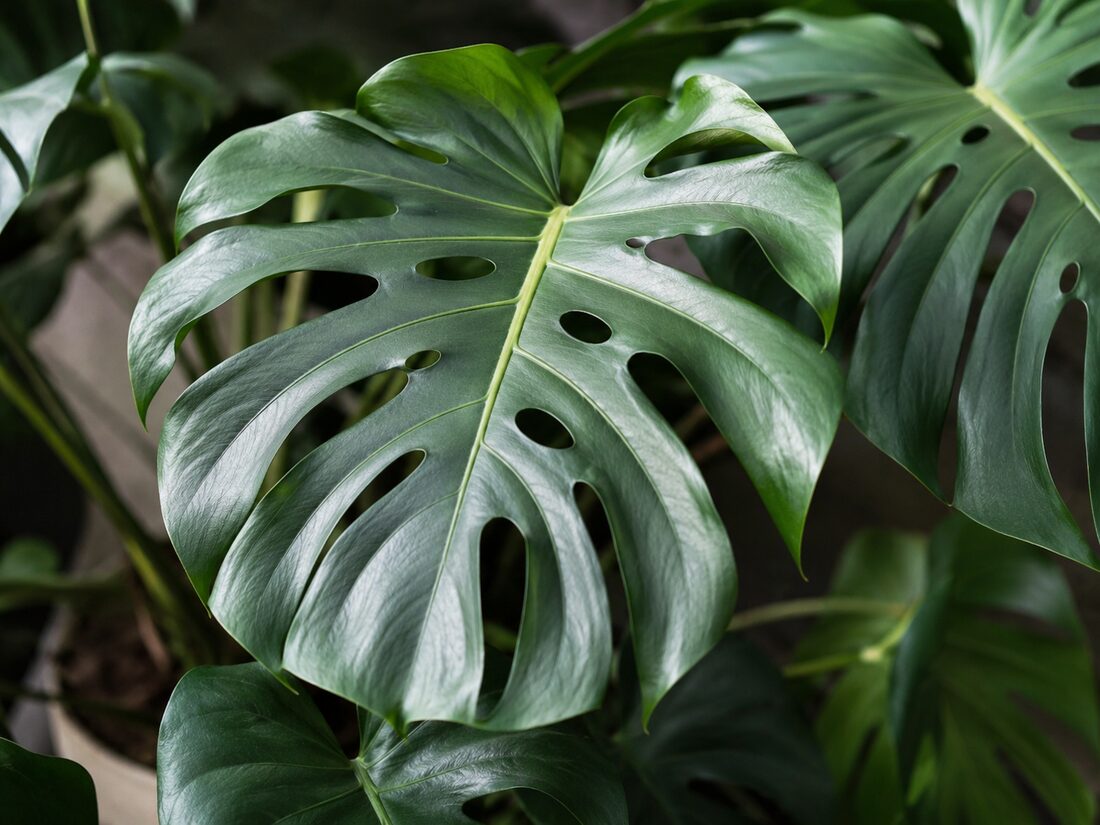
Check the mix, not the calendar
Let the upper part of the mix dry between thorough waterings. Check a few centimetres below the surface and compare the pot's weight with how it feels after watering. A dry surface can hide a wet root ball in a deep pot.
Water across the surface until excess drains, then empty the saucer or outer pot. Wait while the mix remains moist; do not impose a weekly schedule. Pot size, light, temperature and the mix all affect drying. If the plant wilts in wet soil, check drainage and root health before adding more water.
Drainage, pot size and climbing support
Use a container with drainage holes and an airy houseplant mix. Potting mixes differ: ordinary compost is not automatically unsuitable, and no single recipe suits every home. Bark or perlite can improve structure in a moisture-retentive mix.
Repot when roots crowd the container or the mix no longer functions well. Choose a modest increase in pot size rather than a large reservoir of wet compost. Give a growing vine a sturdy pole or trellis, with loose ties around the main stem rather than the leaf stalks.
Keep conditions steady
A warm room around 18–25°C (65–77°F) is a practical target. Avoid cold draughts and direct heat from radiators. If edges brown, check moisture and roots as well as dry air; the same visible damage can have several causes.
Feed according to growth and the label
Use a fertiliser intended for houseplants at its labelled dilution and interval. Check whether fresh compost already contains fertiliser. Reduce or pause feeding when growth slows, rather than treating yellow leaves with extra feed. Never use fertiliser as a remedy for damaged roots.
Choose the symptom you can see
- Yellow leaves →Check moisture, the affected leaves and recent changes before deciding on a cause.
- Brown, crispy edges →Compare watering, heat, light and feeding history.
- New leaves without holes →Often a question of development and conditions, not illness.
- Spreading spots or yellow halos →Appearance alone cannot identify a pathogen. Separate the plant if a spreading disease is suspected.
- Fine webbing or tiny moving specksInspect leaf undersides for mites. Isolate affected plants, identify the pest and use a treatment labelled for that pest and indoor plants. Raising humidity alone is not a treatment.
Propagation: include a node
Use a stem cutting containing a node, the part of the stem from which new growth can develop. A detached leaf and its stalk alone will not produce a new vine. Wear gloves when cutting and use clean tools. Root the cutting in water or a suitable propagation mix; keep leaves out of the water. Pot a water-rooted cutting once it has developed a useful root system, rather than relying on a fixed number of weeks.
Keep it away from pets and children
Monstera contains irritating calcium oxalate crystals and is toxic to cats and dogs. If a pet may have chewed it, contact a veterinarian or animal poison service promptly. Difficulty swallowing or breathing needs urgent veterinary attention. Wear gloves when handling cut tissue.
Does it produce fruit?
Fruiting is unusual indoors. See the fruit guide for an explanation of its appearance and why unripe fruit must not be eaten.