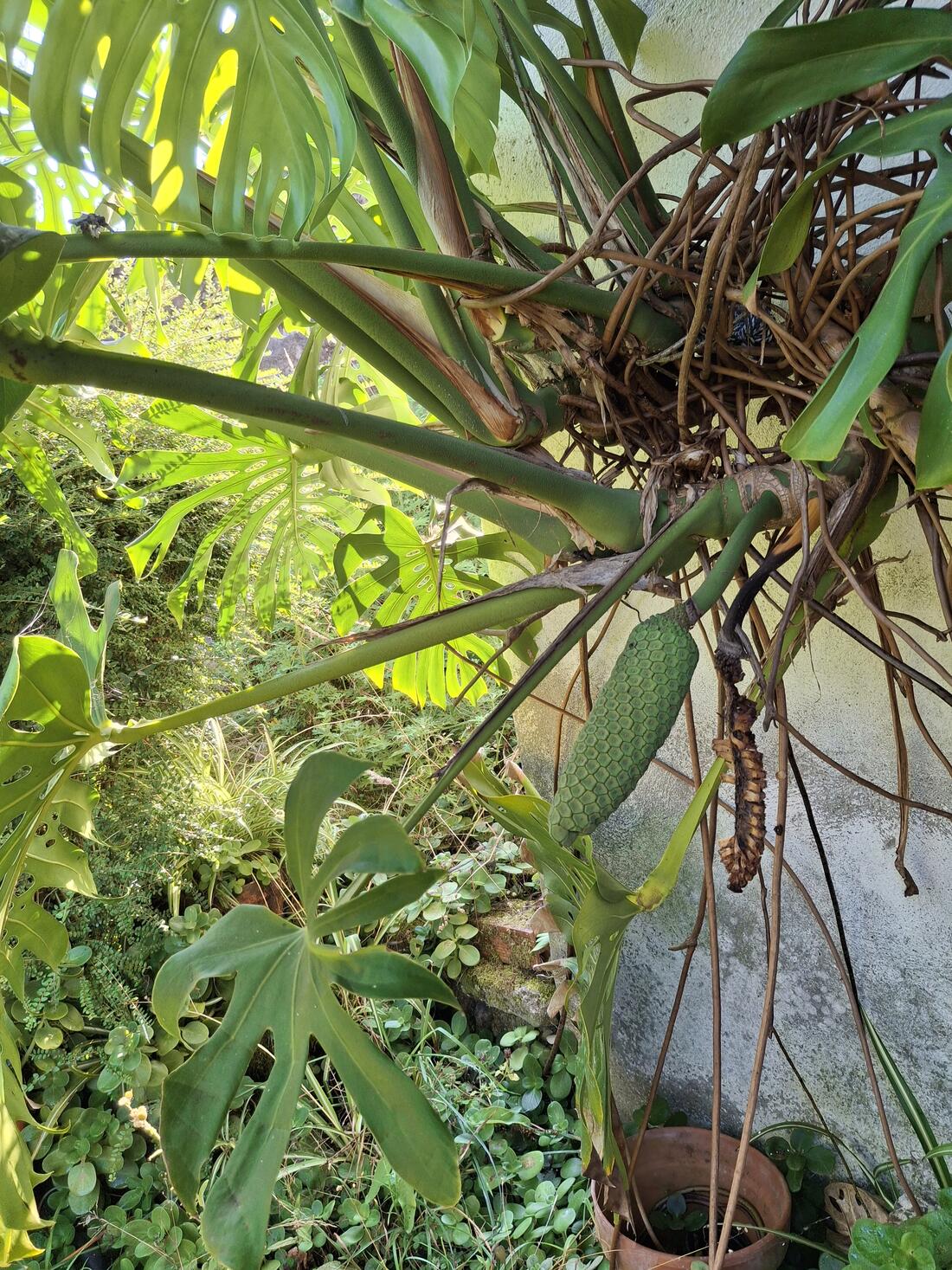
A fruit that resembles a green corn cob
Monstera deliciosa produces an elongated fruit covered with tightly packed, roughly hexagonal scales. It develops from a flower spike. This appearance is interesting to document, but a photograph is not enough to confirm that a fruit is safe to eat.
Why you rarely see it on a houseplant
Flowering and fruiting are uncommon indoors. A healthy Monstera can remain a foliage plant throughout its life in a home. Do not increase fertiliser or move it abruptly into strong sun in an attempt to force fruit.
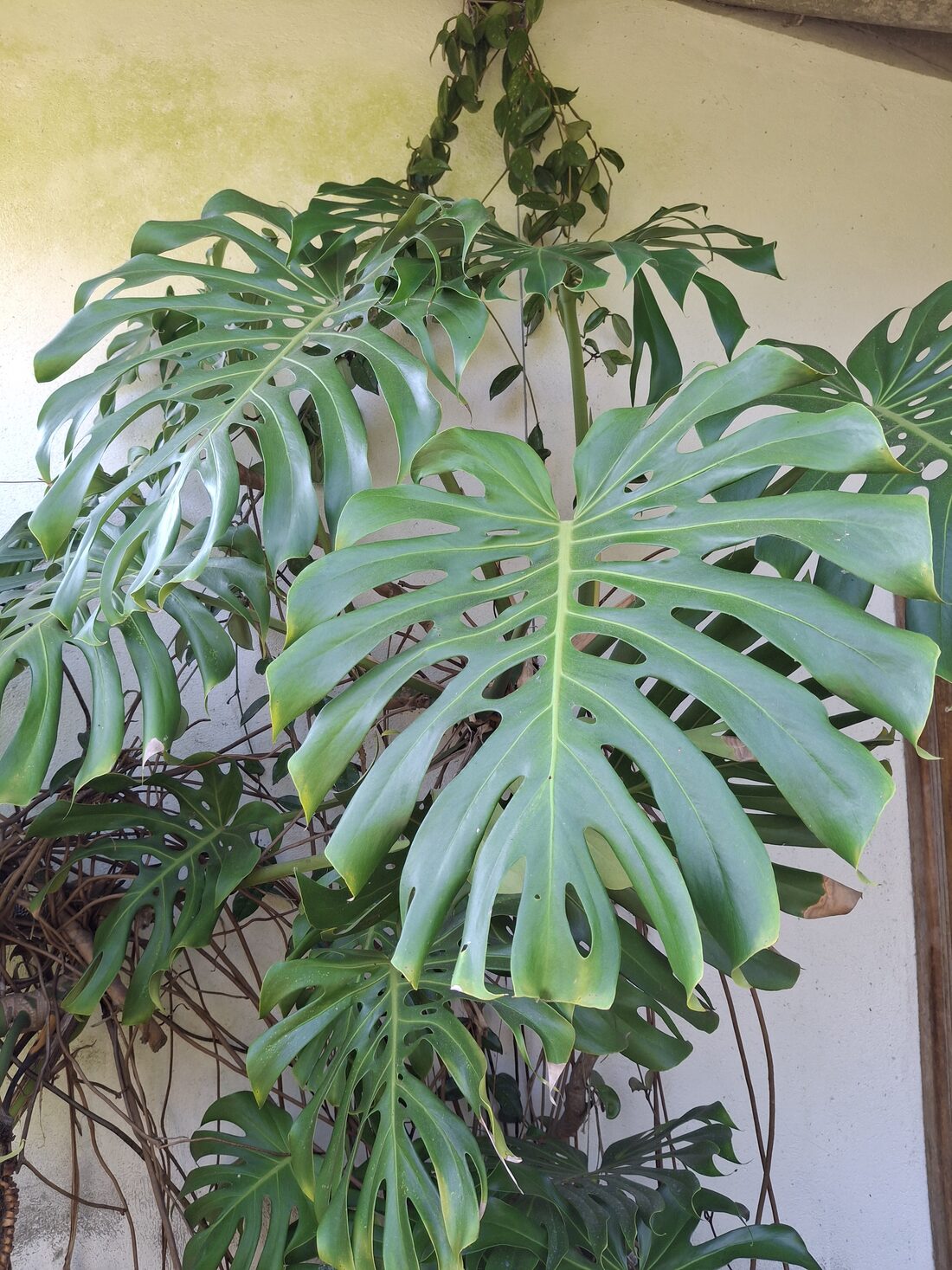
Ripening takes time; a calendar is not a safety test
Development can take a little over a year. Ripening proceeds along the fruit, and the scales naturally loosen and fall away. Firmly attached scales cover immature portions. Different portions may be at different stages.
UF/IFAS describes ripe pulp as separating easily from the core. That is a description of ripening, not a guarantee for a fruit identified from an online image. If identification or ripeness is uncertain, do not eat it. Even ripe fruit may cause reactions in some people.
The images here illustrate appearance; they do not establish a harvest date, how long the pictured fruit has been developing or how many months remain. Those details require observations of the actual plant over time.