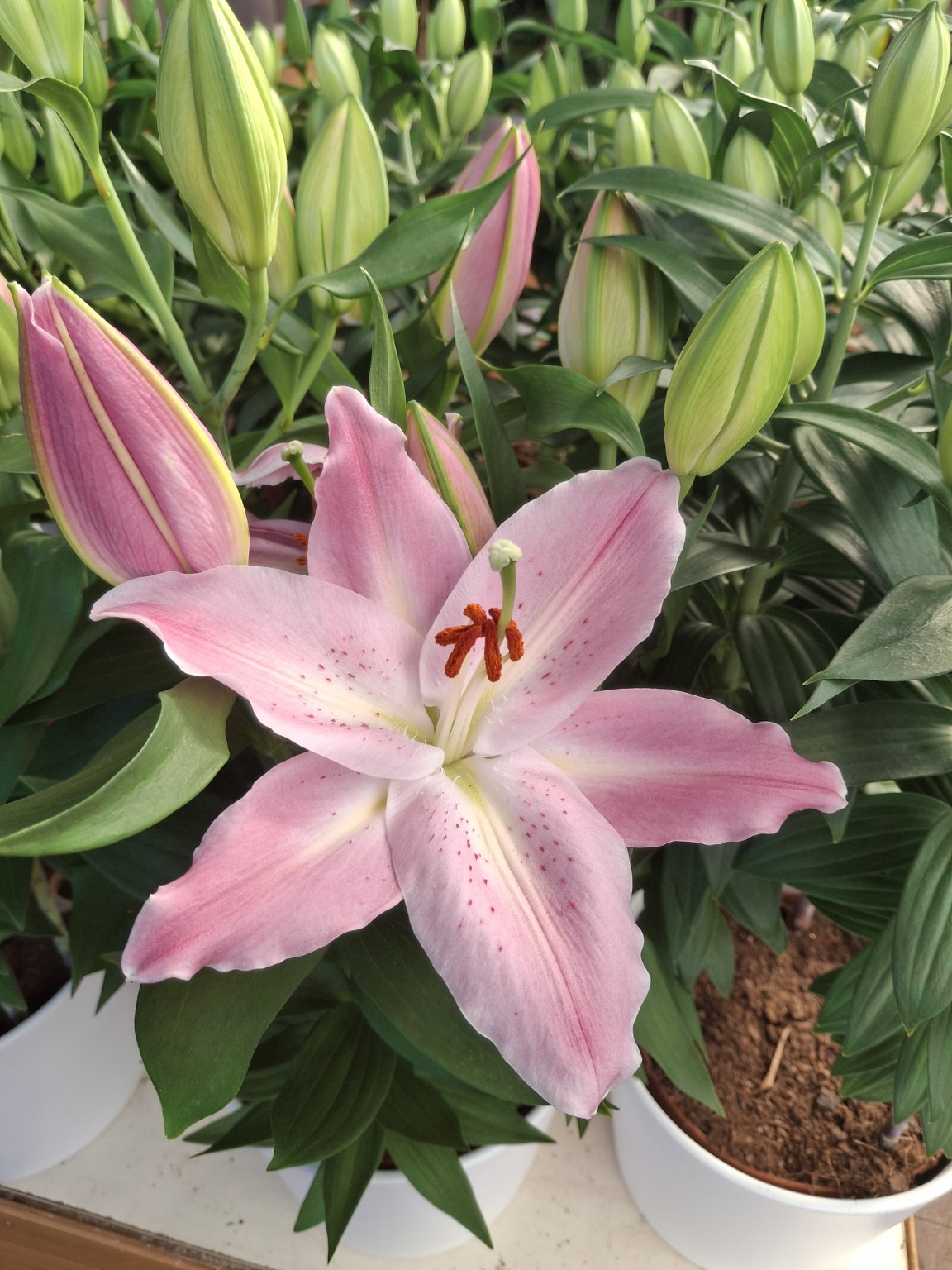
A flowering bulb with a seasonal cycle
The plants shown here are true lilies, Lilium, photographed at a nursery as buds and open flowers. One label reads "Azucena" and another identifies Lilium. We have not confirmed their cultivar names. The photographs show different plants, not a time sequence of one flower opening.
This guide covers potted lilies bought for a temporary indoor display and their care afterwards. They grow from bulbs and have a seasonal cycle. A pot of flowers can be kept going beyond its first display, but a warm living room all year is not the right long-term arrangement for most lilies.
If your plant has broad leaves rising from the base and a white hood around a central spike, use the Peace Lily guide. That is Spathiphyllum, a different plant with different care.
True lilies and cats do not belong together
The FDA warns that Lilium can cause fatal kidney damage in cats. Leaves, stems, flowers and pollen are hazardous; water from a vase containing lilies can also be dangerous. Avoid bringing these lilies into a home with cats, including as cut flowers.
If a cat may have eaten any part, licked pollen or drunk lily vase water, contact a veterinarian or animal poison service immediately. Do not wait for symptoms. A photograph or plant label can help identification. Removing pollen, or choosing a double-flowered lily, does not make the remaining plant safe.
A bright, cool place for the display
Place a newly purchased flowering pot in a bright room, away from radiators, hot afternoon glass and cold drafts. A cooler comfortable room helps you avoid the heat stress of a sunny, overheated windowsill. Do not put it in deep shade simply because the flowers are already open.
Keep the pot steady and give the stems room. If you use a support, avoid pushing it through a bulb. When moving an actively growing plant outside after flowering, wait for suitable frost-free conditions and introduce outdoor light gradually. Most garden lilies need sun or partial shade rather than a permanently shaded position.
Keep growing roots moist, with room for air
During active growth, aim for lightly moist mix. Check when the surface begins to dry and feel just below it; do not let the entire root ball repeatedly dry hard. Equally, a wet outer pot is not a reserve of useful water. Roots and bulbs can deteriorate in persistently saturated mix.
Remove a decorative sleeve or lift the nursery pot out of its cover before watering. Water evenly, allow it to drain, then empty any collected water. How quickly the mix dries will change with temperature, leaf growth and the container. Use those checks rather than a weekly quota.
There is usually no need to disturb a newly bought flowering pot solely because it looks crowded. If the pot drains and the roots can be watered properly, leave major repotting until the appropriate stage of its cycle.
Buds that stay closed or fail
Firm, intact buds can simply be at an earlier stage. The buds in a cluster do not have to open together. The green buds in our photograph illustrate their shape and arrangement; a still photograph cannot tell us when they will open.
If buds shrivel, yellow or fall, review what changed: did the root ball dry out during transport, remain wet inside a cover, or sit beside a heater? Look closely for damage and insects around buds and young leaves. These are checks to make, not a diagnosis from bud colour.
Keep conditions steady and avoid handling or forcing buds open. Extra fertilizer is not a rescue treatment for an already damaged bud. Record whether the remaining buds continue to develop.
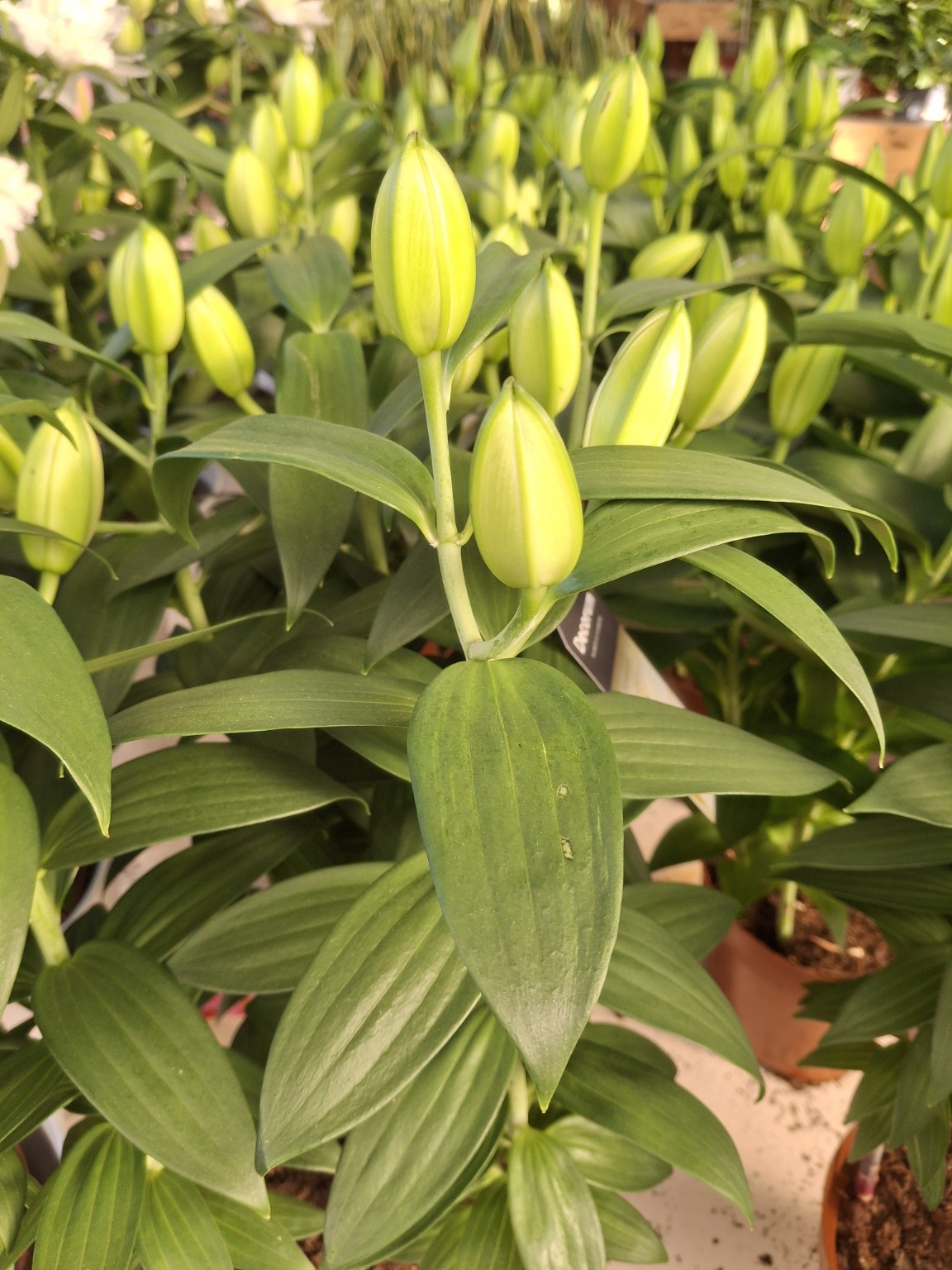
The last flower is not the end of the bulb
Remove faded flowers without stripping the green leaves or cutting the whole stem down. Those leaves continue supplying the bulb. Keep watering according to moisture while the plant is green, and provide good light. When the foliage has naturally yellowed and died back, remove the dead stem.
For a lily being kept for another season, use a suitable container-plant fertilizer during active growth at the labelled rate. Account for any feed already in the potting mix and stop as the plant enters dormancy. A high-potassium feed is an option; more concentrated feeding will not guarantee another flush of flowers.
Do not expect the spent flower stalk to behave like an orchid spike. Next season's growth comes from the bulb. A recently forced plant may need time to rebuild its reserves before another good display.
Plan for the next season
Keep the original label if you have it: hardiness, eventual height and soil preferences vary between lily groups. In a suitable climate, the bulb can live in the garden or an outdoor container. Acclimate green plants to outdoor conditions; do not expose soft indoor growth to frost.
For an unidentified potted lily, a cool, sheltered, frost-free and ventilated place is a cautious overwintering option. Protect the pot from prolonged rain and waterlogging. During dormancy, check occasionally and keep the mix only just moist. A heated living room does not provide the cool winter conditions many lilies need for reliable flowering.
When repotting, choose a container with enough depth for its bulb and roots, drainage holes and a suitable free-draining mix. Planting depth varies by lily type; follow a reliable identification or the bulb supplier's instructions rather than applying one depth to every lily.
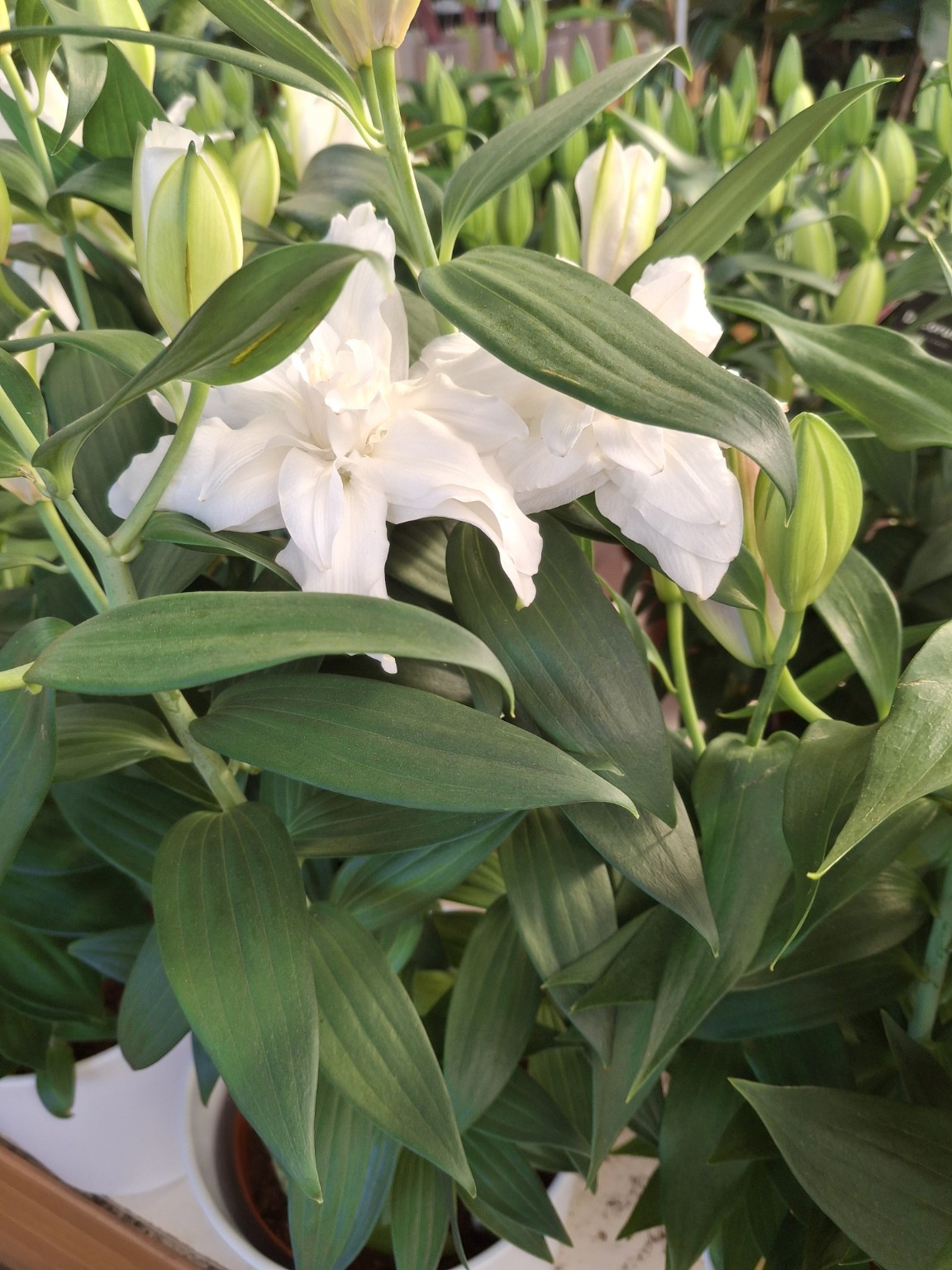
Yellow leaves, soft stems and damaged foliage
Gradual dieback after flowering can be part of the seasonal cycle. Rapid yellowing while buds are still developing, especially with collapse or wet mix, needs investigation. Check drainage and moisture before watering again.
If the base is soft or the plant continues to collapse in wet mix, inspect the roots and bulb. Firm scales are different from soft, decaying tissue. A badly rotted bulb is unlikely to recover; avoid using diseased material for propagation.
Look for aphids around young growth and, where present locally, lily beetles, their larvae or slugs on outdoor plants. Holes alone do not identify the culprit. Spreading leaf spots or grey mould call for closer investigation, removal of dead debris and improved air circulation. Water the mix rather than routinely wetting the foliage. Identify the problem before choosing a treatment.
Increase lilies by separating bulbs
For a first attempt, division of an established bulb clump is more straightforward than scaling. Wait until the plant has completed its growth cycle and the foliage has died back. Lift it carefully, separate naturally distinct healthy bulbs and replant promptly at a depth suited to their type. Lily bulbs can dry out while left exposed.
Small daughter bulbs need time to reach flowering size and may take several seasons. Some lilies also form bulbils on their stems, but that is not a feature to expect from every hybrid. A commercial pot containing several stems does not necessarily need immediate division.
See bulb division in the propagation guide for where this method fits alongside houseplant cuttings and offsets.
Reference material
Reference material consulted for this independently written guide. The publishers listed have not reviewed or endorsed it.
Photographs on this page were taken by the site owner. They document individual plants, not confirmed diagnoses.
- RHS — Lilies: growing in containers; How to grow lilies.
- NC State Extension, Plant Toolbox — Lilium.
- Iowa State University Extension and Outreach — Growing Lilies in Iowa; How to Propagate Garden Lilies.
- Iowa State University Extension and Outreach — Selection and Care of the Easter Lily (indoor display and transition outdoors).
- University of Maryland Extension — Watering Indoor Plants; Diagnose Indoor Plant Problems; Root Rots of Indoor Plants.
- University of Illinois Extension — Watering (Houseplants).
- U.S. Food and Drug Administration — Lovely Lilies and Curious Cats: A Dangerous Combination.